Why Your Homemade Brownies Are Cakey (And The Simple Shifts That Guarantee Fudgy Perfection Every Time)
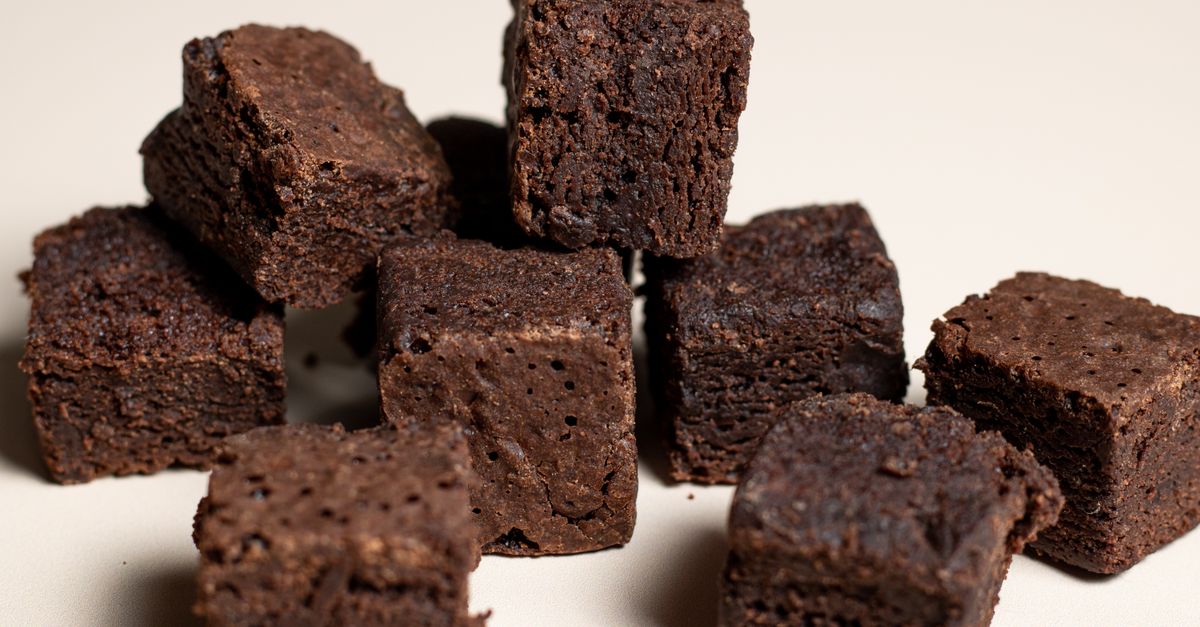
There’s nothing quite like the promise of a homemade brownie: a perfectly crisp, crackled top, deep chocolate flavor, and a dense, moist, and utterly fudgy interior that melts in your mouth. Yet, for many home bakers, that dream often crumbles into a cakey, dry disappointment. I’ve been there more times than I care to admit. I’d follow recipes diligently, only to pull a pan of what felt more like chocolate cake squares than the decadent fudgy brownies I craved.
For years, my brownies were consistently… fine. They were edible, sure, but they lacked that signature chew and moist density that defines a truly great fudgy brownie. I blamed my oven, my flour, even the chocolate itself. What I didn’t realize was that the key to unlocking fudgy perfection lay not in obscure ingredients or complicated techniques, but in a few fundamental shifts in ingredient ratios and mixing methods that almost every online recipe gets wrong. It’s not just about adding more butter; it’s about understanding the delicate balance between fat, sugar, flour, and eggs.
This isn’t an article about what kind of chocolate to buy (though good quality certainly helps) or fancy toppings. This is about the foundational science and technique behind the perfect fudgy brownie, giving you the control to banish cakey results forever. Once I understood these core principles, my brownie game transformed, and yours will too.
Key Takeaways
- Prioritize fat over flour by reducing the flour content to achieve a dense, fudgy texture instead of cakey.
- Increase the egg yolk-to-white ratio or use an extra yolk to add richness and chewiness while minimizing leavening.
- Incorporate both granulated and brown sugar, as brown sugar’s moisture and molasses contribute to a chewier, more fudgy crumb.
- Use a melted butter and warm chocolate base to dissolve sugar crystals, resulting in a glossy, crackled top and consistent fudginess.
Reduce Flour for Density, Not Structure
The most common culprit behind cakey brownies is simply too much flour. Think about it: flour provides structure. In a cake, you want structure to create that light, airy crumb. In a brownie, you want the opposite – a dense, almost gooey texture that holds its shape just enough. Most standard brownie recipes call for a flour-to-fat ratio that leans too heavily towards cake. In my experience, reducing the flour is the single most impactful change you can make.
When I first started experimenting, I was nervous about reducing flour, fearing my brownies would just turn into chocolate soup. But the difference was profound. For a typical 8x8 or 9x9 inch pan, many recipes will suggest around 1 to 1.5 cups (120-180g) of all-purpose flour. I found that this range almost always produced a cakey result. What actually works for dense, fudgy brownies is closer to 3/4 cup (90g) to 1 cup (120g) of flour for the same size pan.
This isn’t a hard and fast rule, as the exact amount will depend on your specific recipe’s other ingredients, but it’s a critical starting point. When you reduce the flour, you’re essentially reducing the gluten development and structural proteins that contribute to lift and a drier crumb. Instead, the higher fat and sugar content can shine through, creating that coveted dense, moist, fudgy bite. The key is to think of flour as a binder, not a primary structural component in fudgy brownies. I learned to weigh my flour, as even slight variations when scooping can lead to significant differences in consistency.
Adjust Egg Ratios for Chewiness and Moisture
Eggs play a dual role in brownies: they add moisture and richness (yolks) and provide lift and structure (whites). If your brownies are cakey, it’s likely your egg ratio, or the total amount of egg, is skewed towards too much leavening, meaning too many egg whites. More egg white means more protein, more structure, and more air incorporation when beaten – all hallmarks of a cake, not a fudgy brownie.
What truly transformed my brownies was a simple adjustment: use an extra egg yolk or slightly reduce the total number of whole eggs while adding a yolk. For example, if a recipe calls for two large eggs, I might use one large egg plus an extra large egg yolk. Or, for a richer brownie, two large eggs plus an extra yolk. The yolks are packed with fat and emulsifiers that contribute to that rich, dense, and chewy texture, preventing dryness without adding excessive leavening.
Think of it this way: egg yolks are your secret weapon for fudginess. They emulsify the fat and water in the batter, creating a smoother, more stable mixture that bakes up incredibly moist and dense. The lecithin in egg yolks is a powerful natural emulsifier, ensuring that all the rich chocolate and butter are evenly distributed, contributing to that luxurious, melt-in-your-mouth quality. The protein in egg whites, on the other hand, sets firmly when heated, creating that airy, cake-like structure. By tipping the balance towards yolks, you’re actively steering your brownies towards density and chewiness.
Master the Sugar Blend for a Glossy Top and Chewy Texture
Sugar is not just for sweetness; it’s critical for texture and that desirable crackled top. A common mistake is relying solely on granulated sugar, which can lead to a slightly drier, crisper brownie. For true fudgy perfection, you need a blend of sugars.
My go-to strategy is to combine granulated sugar with brown sugar. Granulated sugar provides the crisp, crackled crust and sets the initial structure. However, it’s brown sugar that brings the magic for chewiness and depth. Brown sugar contains molasses, which adds moisture, a subtle caramel note, and a chewy texture that granulated sugar alone cannot achieve. The hygroscopic nature of molasses in brown sugar helps keep the brownies moist for longer, preventing them from drying out.
For an 8x8 or 9x9 inch pan, a good starting point is to use a total of 1.5 to 2 cups of sugar, with at least 1/4 to 1/2 of that being packed brown sugar. So, if a recipe calls for 1.5 cups of granulated sugar, try 1 cup granulated and 1/2 cup packed brown sugar instead. This blend creates a brownie that is sweet, moist, and delightfully chewy, with a top that glistens and cracks just so. The higher sugar content also helps prevent excessive gluten development, as sugar is a tenderizer, interfering with gluten strands and contributing to a softer crumb.
Use Melted Butter and Warm Chocolate for Superior Fudginess
Many brownie recipes start with creaming butter and sugar, a technique common in cakes and cookies to incorporate air. While this works for those applications, it’s detrimental to fudgy brownies. Incorporating too much air early on will inevitably lead to a cakey texture.
What changed everything for me was starting with melted butter and warm, melted chocolate. When butter is melted (not just softened), it completely coats the flour particles, inhibiting gluten development and promoting tenderness. Furthermore, mixing the sugar into warm, melted butter and chocolate helps the sugar crystals dissolve. This is crucial for two reasons:
- Glossy, Crackled Top: Dissolved sugar creates a more uniform batter that bakes into that iconic, thin, shiny, crackled top that is the hallmark of a truly great brownie.
- Consistent Fudginess: Undissolved sugar crystals can draw moisture, leading to a grittier or less uniformly fudgy texture. When the sugar is properly dissolved, the entire brownie bakes up with a consistent, luxurious fudginess.
My process involves melting butter gently (either on the stovetop or in the microwave) then stirring in chopped chocolate until it’s fully melted and smooth. This creates a rich, warm base into which I then whisk my sugars. The warmth helps the sugars dissolve without needing excessive mixing, which could incorporate air. Only after the sugar is mostly dissolved do I add the eggs, whisking them in thoroughly but gently. This sequence ensures maximum fudginess and minimum cakiness, delivering a brownie that is dense, rich, and utterly irresistible every single time. Avoid using a stand mixer with a whisk attachment; a simple hand whisk or spatula is all you need to keep air incorporation to a minimum.
Don’t Overbake (The Toothpick Test is a Lie for Brownies)
This is perhaps the biggest misconception in brownie baking, and one that leads to more cakey results than almost anything else: the toothpick test. For cakes, a clean toothpick means it’s done. For brownies, a clean toothpick means it’s overdone and will likely be cakey.
Fudgy brownies need to be pulled from the oven when they still look slightly underbaked in the center. The residual heat in the pan will continue to cook them as they cool, a process known as carryover cooking. If you wait for a clean toothpick, you’ve already gone too far.
What actually works is to look for a moist crumb with fudgy streaks on the toothpick, or even better, a slight jiggle in the center of the pan when gently shaken. The edges should be set, but the very middle should still look a little wet. In my oven, this usually means cutting the baking time suggested in most recipes by 5-10 minutes. For an 8x8 or 9x9 inch pan, this typically translates to 25-30 minutes, not 35-40 minutes. Once out of the oven, resist the urge to cut into them immediately. Let them cool completely in the pan, preferably on a wire rack. This allows them to set properly, intensify their fudgy texture, and develop that perfect crackled top without drying out. Patience is truly a virtue when it comes to the final texture of fudgy brownies.
Frequently Asked Questions
Q1: Can I use cocoa powder instead of melted chocolate for fudgy brownies?
A1: Yes, you can, but achieving the same depth of fudginess requires a slightly different approach. When using cocoa powder, increase the fat content (usually butter) and ensure you bloom the cocoa powder with hot liquid (like hot water or coffee) before adding it to the batter. This intensifies the chocolate flavor and helps achieve a richer, fudgier texture. However, recipes with a significant amount of melted chocolate generally yield a denser, more luxurious fudginess due to the cocoa butter content in the chocolate.
Q2: My brownies are still a bit dry, even with your tips. What could be wrong?
A2: Dryness often stems from overbaking, even if it’s subtle. Review the baking time and rely on visual cues (set edges, slightly jiggly center) rather than a clean toothpick. Also, check your flour measurement – too much flour, even a tablespoon or two, can significantly dry out brownies. Weighing your flour (1 cup = 120g) is far more accurate than using measuring cups.
Q3: Why do my brownies sink in the middle after cooling?
A3: A slight dip in the center is normal for very fudgy brownies due to the reduced structural elements. However, if they’re significantly sinking, it might be due to excessive leavening (too many egg whites or too much baking powder/soda if your recipe includes it), opening the oven door too early, or a drastic temperature fluctuation during baking. Ensure your oven temperature is accurate with an oven thermometer.
Q4: Should I use baking powder or baking soda in fudgy brownies?
A4: For truly fudgy brownies, I generally avoid chemical leaveners like baking powder or baking soda. These ingredients are designed to create lift and an airy texture, which is the opposite of what you want in a dense, fudgy brownie. If your recipe calls for them, consider omitting or significantly reducing them (e.g., from a teaspoon to 1/4 teaspoon) to minimize cakiness. The slight lift from the eggs is usually sufficient.
Q5: Can I freeze fudgy brownies?
A5: Absolutely! Fudgy brownies freeze exceptionally well. Once completely cooled, cut them into individual squares and wrap each tightly in plastic wrap, then place them in an airtight freezer-safe container or bag. They can be frozen for up to 3 months. Thaw at room temperature for an hour or two, or gently warm in the microwave for an extra gooey treat.
Written by Evelyn Reed
Mindfulness & Personal Well-being
A former editor for a prominent lifestyle magazine, Evelyn brings a keen eye for compelling narratives and practical advice to our team.
You Might Also Like

Why Your DIY Car Detailing Fails Most People (And What Actually Works for a Showroom Shine)
Ever wondered why your DIY car wash never quite matches a professional detail? Discover the crucial mistakes most people make and the techniques that truly deliver a showroom shine.

Why Your Home Still Feels Stuffy (Even After Opening Windows) — And What Actually Works for Real Fresh Air
Discover why your home feels stuffy despite open windows and learn the practical, non-obvious strategies for true, lasting fresh air.
Why Your Home Still Feels Stuffy (Even After Opening Windows) — And What Actually Works for Real Fresh Air
Discover why your home still feels stuffy even with open windows and learn actionable, counter-intuitive strategies for truly fresh indoor air.